
Bangladesh’s LDC Graduation — Key risks & recommended actions
Bangladesh is scheduled to graduate from Least Developed Country (LDC) status on 24 November 2026, pursuant to the UN General Assembly resolution adopted on 24 November 2021. The effective date was set following an extended preparatory period granted in light of the COVID-19 pandemic.
LDC graduation entails several material risks. Key among them are the potential loss of preferential market access—most notably the EU’s Everything But Arms (EBA) scheme—and heightened scrutiny of export-linked cash incentives. These shifts could erode cost competitiveness across export-oriented sectors, particularly ready-made garments (RMG) and leather goods. International assessments, including warnings from the WTO, estimate that Bangladesh could forfeit up to USD 8 billion in annual export earnings—approximately 14 percent of total exports—once LDC preferences lapse.
The European Union has offered a three-year transition period, allowing continued access to EBA benefits until November 2029. Beyond that window, Bangladesh faces a narrow pathway to securing preferential access under the Generalised Scheme of Preferences Plus (GSP+), or alternatively negotiating bilateral free trade agreements. GSP+ eligibility, however, carries substantially more stringent requirements across labour rights, governance, environmental protection, and human rights benchmarks—criteria that may prove challenging to satisfy within a compressed timeframe.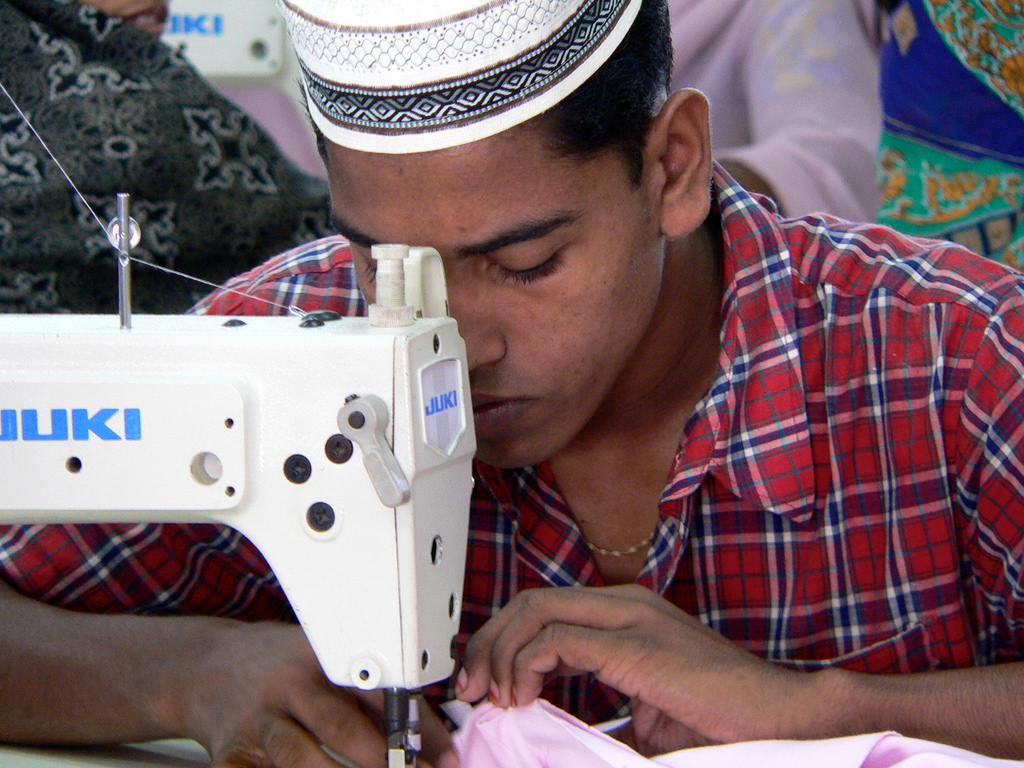
Bangladesh’s recent ratification of ILO Conventions 155 (labour rights in refusing hazardous work), 187 (establishes a promotional framework for occupational safety and health), and 190 (aims to prevent violence and harassment at work place) has been welcomed by international trade partners including the EU. The EU ambassador to Bangladesh Mr. Miller said on the 5th December 2025 “As Bangladesh prepares to graduate from LDC [least developed country] status, it can benefit from the EU’s GSP+ scheme. This scheme provides continued preferential market access, but links trade benefits to the implementation of international standards on labour rights, environmental protection, human rights and good governance” – some of the major requirements for GSP+ eligibility.
Negotiations between Bangladesh and the EU are ongoing. Nevertheless, failure to qualify for GSP+ would subject Bangladeshi exports to standard EU Most-Favoured-Nation tariffs of 9–12 percent. While bilateral agreements with major trading partners remain possible, they will demand sophisticated diplomatic engagement and consistent policy credibility—areas in which Bangladesh’s recent track record has been mixed, owing in part to domestic governance weaknesses and uneven international representation.
LDC graduation also affects the continuation of export-contingent subsidies, including the 2-20% cash subsidies depending on the product, is expected to attract greater scrutiny under WTO subsidy disciplines and could be challenged if those are trade-distorting and prohibited for non-LDCs.
In principle, such subsidies must be phased out post-graduation. While limited exceptions exist under the WTO Subsidies and Countervailing Measures (SCM) Agreement, navigating that process is complex and documentation-intensive. Bangladesh’s institutional capacity for sustained compliance and negotiation remains uncertain. Moreover, given the country’s structurally low revenue-to-GDP ratio, fiscal space for maintaining subsidies at historical levels is increasingly difficult to justify, even if withdrawal is gradual.
Accordingly, export competitiveness will need to shift from policy-driven support to productivity-driven efficiency. Priority areas include reducing the cost of doing business, improving logistics and trade facilitation, adopting modern technologies, and strengthening both human capital and institutional capability.
In my view, enhancing efficiency and competitiveness is not optional. For economies like Bangladesh, global geo-political dynamics only amplify this imperative: major economies, including the G7, are increasingly using higher tariffs (for the foes) and preferential trade arrangements (for friends) as tools of strategic alignment, further complicating decision-making for SMEs that rely on stable market access.
A few practical and immediate actions recommended for exporting companies include:
- Map tariff exposure: List your top export products and what % goes to markets that currently give LDC preferences (EU, UK, Canada, etc.). Estimate the extra tariff (or likely range) that could apply post-transition.
- Calculate margin sensitivity: For each Stock Keeping Unit (SKU), estimate how much of the tariff could be absorbed vs passed to buyers. Use simple markup and price-elasticity scenarios to see viability.
- Check rules of origin: If a partner switches you from EBA to GSP/GSP+, their RoO may be stricter and could exclude some products. Verify whether your supply chain meets those origin rules.
- Diversify markets & move up the value chain: Expand into markets that may offer stable quotas/agreements or where tariffs are already low; invest in higher-value products, branding, compliance (sustainability, traceability) that reduce tariff/price exposure.
Last but not least, the on going trend toward de-dollarisation, led mainly by the BRICS members and emerging economies across the globe, is expected to continue making global trade more unpredictable and volatile in the coming decades. The U.S. dollar’s share of global foreign currency reserves has steadily declined from over about 70% in 2000 to roughly 58% by 2024, according to a CNBC report in June 2025.
The currency risks for European companies, conducting business in a foreign currency other than the Euro, only heightens balance-sheet risks on both the purchasing and receivables sides. Such home-made risks are easily avoidable by returning to the Euro as it is the financial reporting base currency of the European companies anyway. Geo-political turmoil and unpredictability of the global trade, however, remain beyond individual company’s control by it’s nature.
-: END :-